
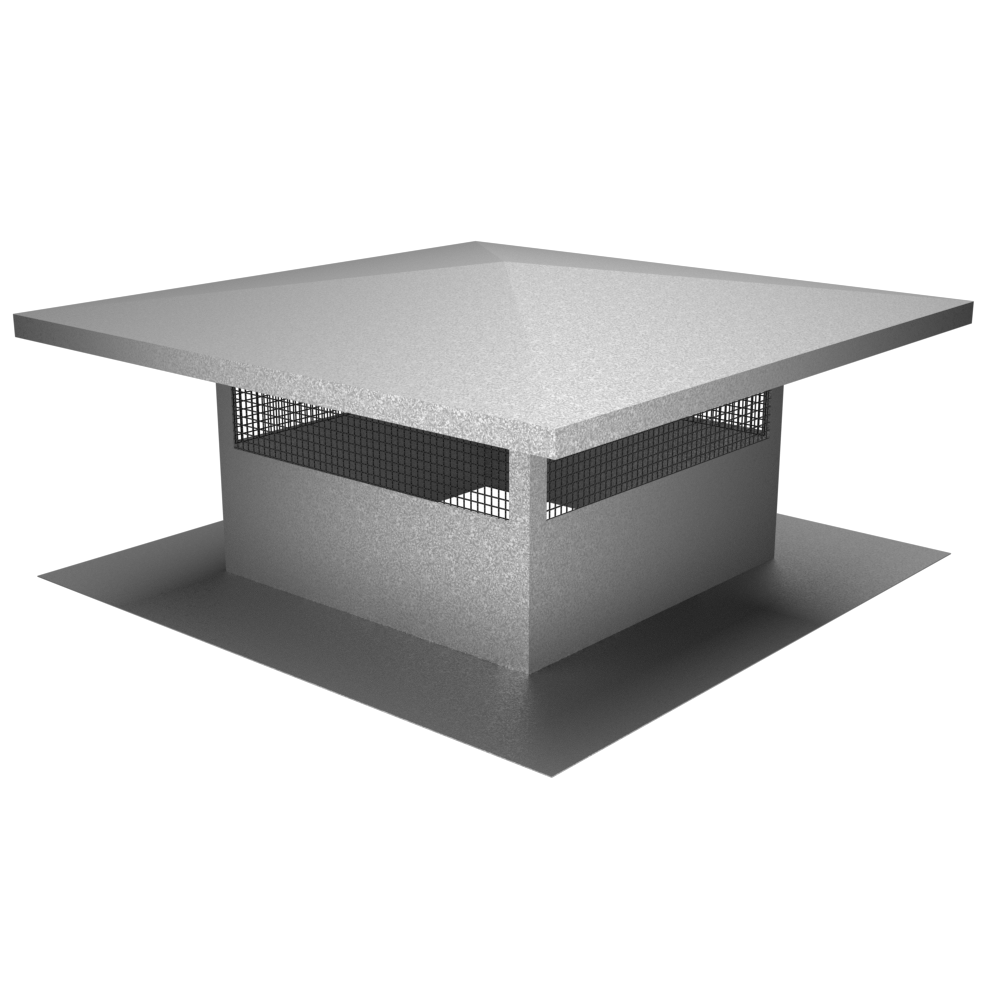
Gravity Vents
Description
A gravity vent is a type of ventilation system that uses the natural flow of air to exhaust stale or contaminated air from a building or enclosed space. Gravity vents are typically installed in roofs or other high points in a building, where they can take advantage of the natural tendency of warm air to rise and escape through the vent.
| Variant |
|---|
| Galvanized 10″x10″ |
| Galvanized 12″x12″ |
| Galvanized 14″x14″ |
| Galvanized 16″x16″ |
| Galvanized 18″x18″ |
| Zincalume 10″x10″ |
| Zincalume 12″x12″ |
| Zincalume 14″x14″ |
| Zincalume 16″x16″ |
| Zincalume 18″x18″ |
Product Specifications
Frequently Asked Questions
Are Gravity Vents used for intake or exhaust air?
Standard Gravity Vents are used for exhaust venting.
How should airflow capacity be evaluated for Gravity Vents?
Passive ventilation through standard Gravity Vents is measured in NFA (net free area in square inches). Using this information, you can determine how many vents are needed for the area being ventilated. The ratio of NFA to ventilated area varies depending on the building's location.
How are Gravity Vents installed?
The installation of a Gravity Vent varies drastically depending on whether it is mounted on a deck or a curb and on the type of roof. In general, match the roof opening or curb to the vent base opening and flash the base flange in accordance with the roofing product manufacturer's recommendations.
Which material is ideal for Gravity Vents?
There are several materials offered for Gravity Vents: 28-gauge Zincalume (lightweight, economical, with seams sealed using sealant), 26-gauge galvanized steel (heavy-duty, with soldered seams), and 26-gauge bonderized steel (heavy-duty, with soldered seams). Galvanized and bonderized units can also be ordered in 24 gauge.
How does a Gravity Vent move air without a fan?
Gravity vents use natural pressure and temperature differences to move air without a powered fan.
Which metals do Gravity Vents come in?
Gravity Vents are made from galvanized steel or Zincalume (Galvalume).